
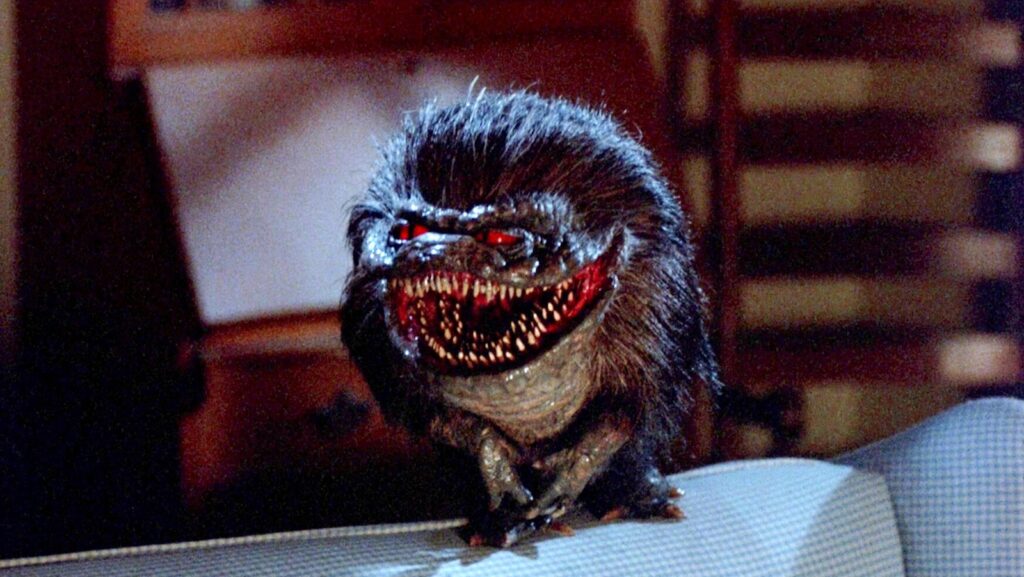
“Critters” (1986) and Its Impact on the Creature Feature Boom
When discussing the wave of small-creature horror films that populated the 1980s, few titles are as memorable—or as influential—as Critters. Released in 1986 and directed by Stephen Herek, the film blended science fiction, horror, and dark comedy into a chaotic but entertaining story about extraterrestrial monsters terrorizing a rural American town. While often compared to Gremlins, Critters carved out its own identity and left a lasting mark on the creature-feature subgenre.
The Premise and Style
The story follows the Brown family, whose quiet farm becomes ground zero when a group of dangerous alien prisoners escape from an intergalactic prison and land on Earth. These creatures—known as Crites—are small, ravenous, spiked-fur monsters with an insatiable appetite for destruction and human flesh. As the town falls into chaos, two intergalactic bounty hunters arrive to stop the creatures before they multiply and spread.
What sets Critters apart from similar films of the era is its tone. It balances genuine horror with slapstick absurdity and science-fiction spectacle. The Crites themselves were brought to life through elaborate puppetry and practical effects, techniques that were a hallmark of 1980s genre filmmaking. The effects team, including future industry figures like Chiodo Brothers collaborators, created creatures that were expressive, grotesque, and surprisingly comedic.
A Distinct Identity in the Shadow of Gremlins
Because it arrived just two years after Gremlins, Critters was frequently labeled as a copycat. However, the film’s tone is notably darker and more science-fiction oriented. Instead of mischievous monsters invading suburbia, the Crites are literal alien convicts—closer to invasive predators than pranksters.
This distinction allowed the movie to develop its own cult following. The film also leaned more heavily into the B-movie tradition, embracing exaggerated violence, pulpy storytelling, and a playful disregard for realism.
Launching a Franchise
The success of Critters led to a small but enduring franchise that includes:
- Critters 2: The Main Course (1988)
- Critters 3 (1991)
- Critters 4 (1992)
One interesting historical footnote is that Leonardo DiCaprio made his film debut in Critters 3, long before becoming one of Hollywood’s most recognizable actors.
Though later entries leaned further into camp and low-budget territory, the franchise kept the Crites alive in pop-culture consciousness for decades.
Influence on the Creature Feature Trend
During the 1980s, horror cinema was experimenting with practical effects and imaginative creature designs. Films like Ghoulies, Tremors, and Gremlins helped create a niche for monster-driven horror that mixed humor with spectacle.
Critters contributed to this trend in several ways:
1. Reinforcing the Small-Monster Formula
The idea that tiny creatures could create large-scale chaos became a recurring concept in genre films.
2. Advancing Practical Creature Effects
The puppetry and animatronics used to portray the Crites demonstrated how expressive practical effects could be when combined with clever editing and sound design.
3. Cult Film Longevity
Even without blockbuster status, Critters proved that quirky horror films could build long-term fanbases through VHS distribution and late-night cable broadcasts.
A Cult Legacy
Today, Critters is remembered as a quintessential 1980s cult horror film. Its blend of creature chaos, rural Americana, and sci-fi absurdity embodies the era’s willingness to experiment with genre storytelling.
The film’s legacy is not just in its sequels, but in the way it helped define a specific style of horror entertainment—one where grotesque monsters, practical effects, and tongue-in-cheek humor could coexist.
Nearly four decades later, the Crites remain one of the most recognizable creature designs of the decade, proving that even the smallest monsters can leave a surprisingly large footprint on horror cinema.