
The Overlooked First Wave of Hellraiser Action Figures by NECA
When collectors think about horror action figures, the work of National Entertainment Collectibles Association—better known as NECA—inevitably comes up. Over the years the company has produced some of the most detailed figures based on horror icons, from Freddy Krueger to Jason Voorhees. Yet among collectors, one particular release often goes underappreciated: the first wave of action figures based on the universe of Hellraiser.
Released during the early 2000s collectible figure boom, NECA’s first Hellraiser wave represented a turning point for horror merchandise. While previous decades had produced horror toys, they were often simplified, censored, or aimed primarily at younger audiences. NECA, however, approached the license with a level of detail and accuracy that treated horror fans as serious collectors.
Bringing the Cenobites to the Shelf
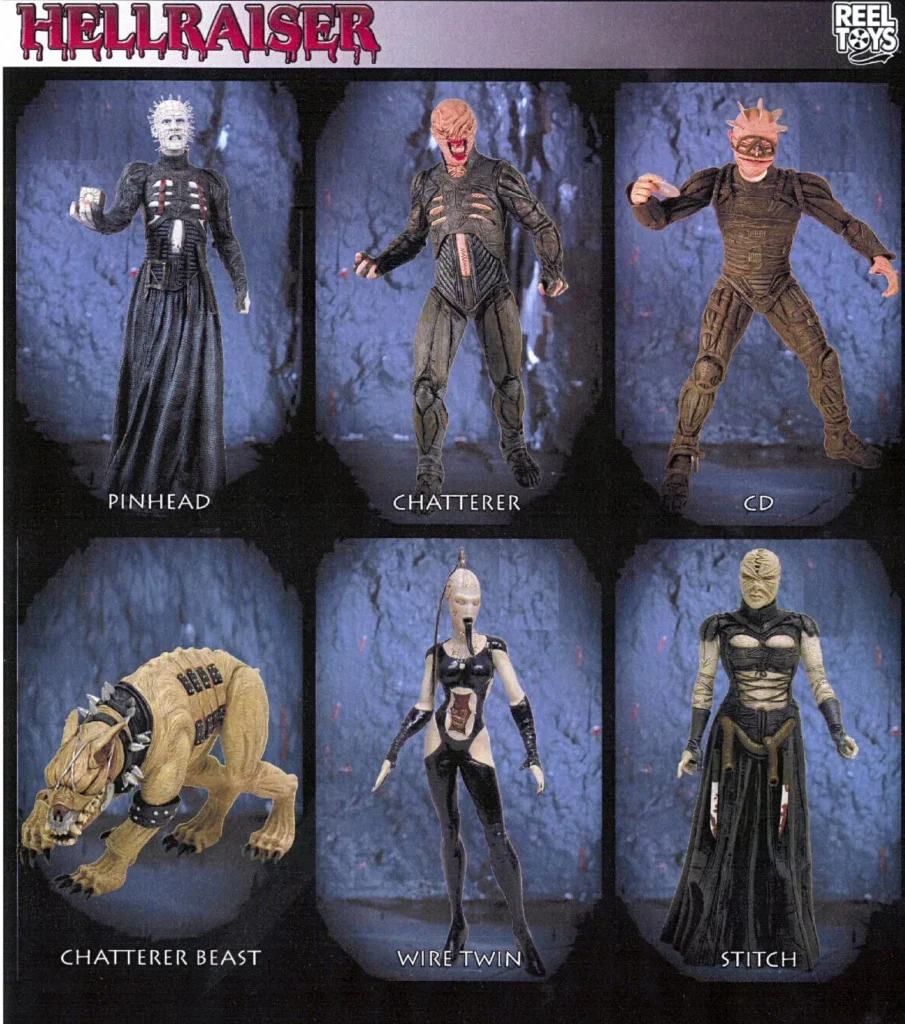
The first wave focused on some of the most recognizable characters from the Hellraiser mythos created by Clive Barker. The line included figures such as:
- Pinhead
- Chatterer
- CD
- Chatter Beast
- Wire Twin
- Stitch
These figures captured the grotesque elegance that made the Cenobites so unforgettable on screen. Sculptors carefully recreated the elaborate body modifications, stitched flesh, and ritualistic costumes that defined the characters. For collectors in the early 2000s, seeing such faithful recreations of these disturbing designs was something genuinely new.
At the time, producing figures based on such graphic source material was still a gamble. The Hellraiser franchise had always existed slightly outside the mainstream horror spotlight, especially compared to slasher giants like Michael Myers or Freddy Krueger. Despite this, NECA leaned into the property’s darker aesthetic rather than toning it down.
A Shift in Horror Collectibles
The early 2000s marked a period when horror merchandise began evolving from toys into display-quality collectibles. NECA’s Hellraiser figures reflected that shift perfectly.
Rather than simple plastic toys, the figures featured:
- Highly detailed sculpting that emphasized the Cenobites’ body horror designs
- Film-accurate paint applications
- Display-oriented packaging meant for collectors
This approach helped reinforce the idea that horror fans were an adult audience willing to invest in high-quality collectibles. In many ways, these figures helped set the tone for the premium horror collectibles that would dominate the market in the following years.
Why the First Wave Is Often Forgotten
Despite their importance, the first wave of NECA’s Hellraiser figures rarely receives the same attention as later horror collectibles. Several factors contributed to this.
First, the early 2000s collectible market was crowded. Companies were producing figures from a wide range of horror franchises, and the Hellraiser line competed for attention alongside characters from many more commercially successful films.
Second, the Hellraiser franchise itself was going through a complicated period at the time, with several direct-to-video sequels diluting the brand’s visibility. As a result, the figures never reached the same mainstream recognition as those tied to more active franchises.
Finally, NECA itself would later refine its sculpting techniques and articulation systems, making some of its earlier releases appear comparatively simple. However, that simplicity is also part of their charm: they represent an early stage in the modern era of horror collectibles.
A Cult Favorite Among Collectors
Today, the first wave of NECA’s Hellraiser figures has become something of a hidden gem for collectors. While not always as widely discussed as later releases, they remain an important step in the evolution of horror merchandise.
For fans of the franchise, these figures captured the unsettling beauty of Barker’s Cenobites in a way that few collectibles had done before. They also demonstrated that even the most disturbing corners of horror cinema could find a place on collectors’ shelves.
Much like the film that inspired them, these figures exist slightly outside the mainstream—but for devoted horror fans, that only adds to their appeal.