
The Cosmic Nightmare of Event Horizon
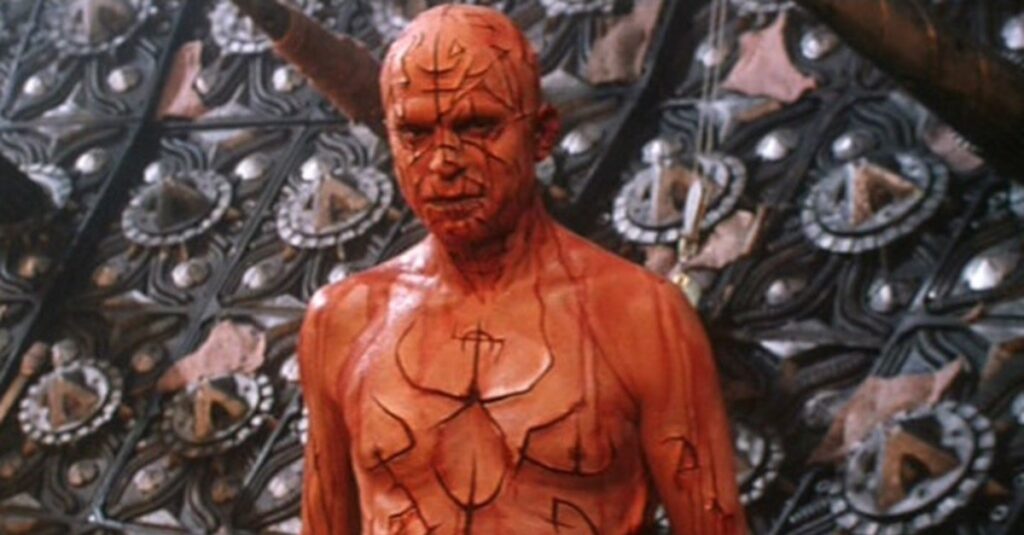
When discussing cosmic horror in film, one title inevitably rises from the darkness of deep space: Event Horizon. Directed by Paul W. S. Anderson, this film has gradually evolved from a misunderstood sci-fi horror release into a cult classic that perfectly captures the terrifying intersection between space exploration and supernatural dread.
At the time of its release in 1997, audiences and critics weren’t entirely sure what to make of it. The film blended science fiction with visceral horror in a way that felt chaotic and overwhelming. But over the years, Event Horizon has been re-evaluated and is now widely recognized as one of the closest cinematic equivalents to pure cosmic horror.
The Story: A Rescue Mission Into Hell
Set in the year 2047, the film follows a rescue crew sent to investigate the sudden reappearance of a long-lost spaceship, the Event Horizon. The ship vanished during its maiden voyage seven years earlier while testing an experimental gravity drive that allows faster-than-light travel.
The crew aboard the rescue vessel Lewis and Clark, led by Captain Miller (played by Laurence Fishburne), is tasked with investigating what happened. Accompanying them is the scientist responsible for the experimental drive, Dr. William Weir, portrayed by Sam Neill.
What they discover aboard the drifting vessel is far worse than a technical malfunction.
The gravity drive was designed to fold space, essentially opening a gateway that allows a ship to jump instantly between distant points in the universe. But something went horribly wrong during the experiment.
The Event Horizon didn’t simply travel through space.
It traveled somewhere else.
The Gateway to Another Dimension
As the crew begins exploring the abandoned vessel, they uncover fragments of disturbing video logs and evidence that the original crew descended into madness and violence. The ship itself seems alive, manipulating the crew through hallucinations drawn from their deepest fears and guilt.
Eventually, the horrifying truth emerges: the gravity drive opened a portal to a dimension of pure chaos and torment. When the ship returned, it brought something back with it.
This concept is where Event Horizon crosses from science fiction into the territory of cosmic horror. The other dimension is never fully explained or defined. It is simply described as a place of endless suffering—a realm so alien and hostile that human minds cannot comprehend it.
The film’s infamous line from Dr. Weir summarizes the revelation perfectly:
“The ship went somewhere… a place you don’t want to go.”
Many fans have compared the film’s hellish dimension to the dark universes described by H. P. Lovecraft, where ancient and incomprehensible forces exist beyond human understanding.
Visual Horror and Lost Footage
One of the reasons Event Horizon remains so memorable is its shocking visual intensity. The film contains disturbing imagery, including glimpses of the original crew’s fate during their time in the other dimension. These flashes of violence and madness are brief but deeply unsettling.
Interestingly, much of the film’s most extreme footage was cut before release. Studio pressure forced Anderson to remove significant portions of the film to reduce its intensity. Over time, rumors spread among fans about the existence of a much darker original version.
Unfortunately, much of the missing footage is believed to be permanently lost, which has only added to the film’s mystique.
Cosmic Horror in Deep Space
While many sci-fi horror films focus on alien creatures or technological threats, Event Horizon takes a different approach. The true antagonist is not a monster but a cosmic force beyond comprehension.
The idea that humanity might accidentally open a doorway to something ancient, hostile, and unknowable fits perfectly within the philosophy of cosmic horror. Like the stories of H. P. Lovecraft, the horror comes from realizing that humanity has tampered with forces far beyond its understanding.
In this sense, the Event Horizon itself becomes a cursed artifact—a haunted object drifting silently through space.
The Film’s Cult Legacy
Despite its rocky release, Event Horizon has built a dedicated fanbase over the years. Many modern viewers now see it as a precursor to the cosmic horror revival seen in films like The Void and Annihilation.
The film’s blend of gothic horror, science fiction, and Lovecraftian dread remains unique even today. Few movies manage to make the vast emptiness of space feel so claustrophobic and malevolent.
A Ship That Should Never Have Returned
Ultimately, Event Horizon endures because of its terrifying central idea: humanity built a machine capable of opening a door into the unknown… and something came back through it.
Space is already vast and mysterious.
But Event Horizon suggests something far worse.
That somewhere in the darkness between the stars, there may be places that were never meant to be discovered.