
The Dark Origin of the Event Horizon: Dark Descent
Nearly three decades after the release of Event Horizon, the terrifying universe of the film has finally expanded beyond the screen with the comic series Event Horizon: Dark Descent. Published by IDW Publishing under their horror imprint IDW Dark, the five-issue miniseries serves as an official prequel that reveals the horrifying fate of the ship’s original crew.
For years, fans of the film were haunted by one question: what actually happened aboard the Event Horizon during the seven years it was missing? The comic finally attempts to answer that mystery—and the results are every bit as disturbing as the film suggested.
A Story That Begins Before the Film
Unlike the movie, which follows the rescue crew investigating the lost vessel, Dark Descent takes readers directly aboard the Event Horizon during its original mission. The story follows Captain John Kilpack and his crew as they test the experimental gravity drive created by Dr. William Weir.
The drive was designed to fold space, allowing faster-than-light travel. But instead of simply jumping across the galaxy, the ship travels somewhere far more terrifying.
Somewhere beyond reality.
As the ship crosses the boundary between dimensions, the crew begins experiencing hallucinations, violent paranoia, and supernatural manifestations. Slowly, the crew realizes they have crossed into a realm of unimaginable torment—one that appears to resemble hell itself.
The comic essentially shows the missing nightmare hinted at in the film’s infamous footage of the original crew tearing each other apart.
A New Demonic Presence
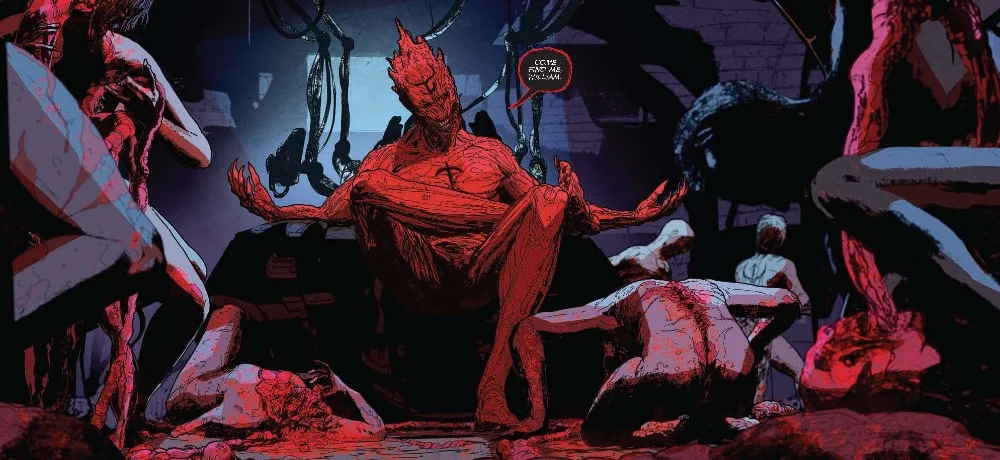
One of the biggest additions introduced by the comic is a supernatural antagonist named Paimon, described as a powerful entity ruling over the chaotic dimension encountered by the ship.
Unlike the film, which kept the evil force vague and cosmic, the comic gives the darkness a more defined presence. Paimon manipulates the crew psychologically, feeding on fear, guilt, and madness as the crew descends deeper into violence and insanity.
This creative choice has sparked debate among fans. Some readers enjoy the expansion of the mythology, while others feel the original film’s horror was stronger when the evil remained unknowable and abstract.
Regardless, the comic fully embraces the franchise’s blend of cosmic horror and demonic imagery, turning the missing voyage of the Event Horizon into a brutal descent into madness.
The Creative Team Behind the Nightmare
The series was written by Christian Ward, with art by Tristan Jones and colors by Pip Martin.
Jones’ artwork leans heavily into the claustrophobic horror of deep space. The ship’s corridors appear organic and decaying, drenched in sickly greens and shadows that make the Event Horizon feel less like a machine and more like a living nightmare.
Visually, the comic captures something the film only hinted at: the slow corruption of the ship itself.
A Long-Awaited Expansion of the Mythology
The original movie became a cult classic partly because it left so many questions unanswered. The brief flashes of the crew’s fate suggested something truly horrific had occurred, but most of it was left to the imagination.
Dark Descent finally opens that door.
The series explores the psychological breakdown of the crew, the influence of the hellish dimension beyond the gravity drive, and the true origin of the malevolent force that later manipulates Dr. Weir in the film.
Interestingly, the success of the comic has already led to another expansion of the universe. A follow-up series titled Event Horizon: Inferno continues the story centuries after the original film, pushing the franchise even deeper into cosmic horror.
Returning to Hell
What makes Event Horizon: Dark Descent fascinating is that it does something many horror prequels fail to do—it leans into the mystery instead of trying to completely explain it.
The comic gives readers glimpses of the nightmare dimension that consumed the ship, but it never fully defines it. The horrors remain chaotic, brutal, and deeply alien.
In the end, the series reinforces the terrifying idea at the heart of the original story:
Humanity built a machine to cross the stars.
Instead, it opened a door to hell.
And once that door was opened, something on the other side noticed.