
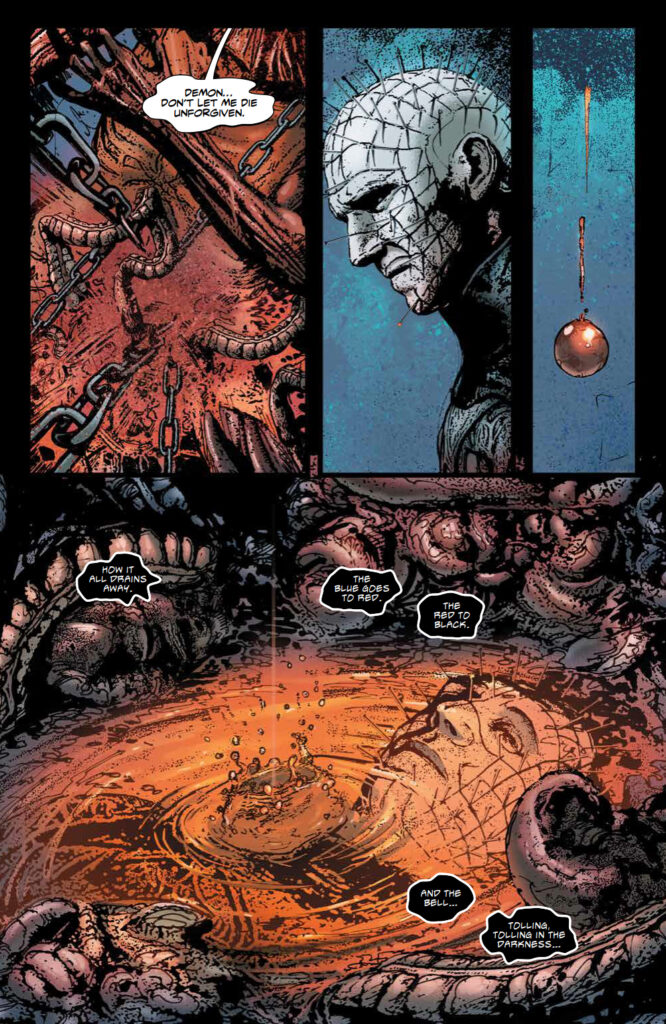
The Hellraiser Comics: Expanding the Labyrinth Beyond the Screen
When most people think of Hellraiser, they picture chains tearing through the air, the grotesque rebirth of Frank Cotton, and the chilling presence of Pinhead. The film, directed by Clive Barker, quickly became one of the most distinctive horror movies of the late 1980s, blending sadomasochistic imagery with existential dread. But what many horror fans overlook is how deeply the Hellraiser universe expanded in comics, creating stories that went far beyond what the films could show.
The Hellraiser comics didn’t simply retell the films. Instead, they opened the doors of the Labyrinth and invited readers into its darkest corners.
The Epic Comics Era (1989–1993)
The first major expansion of the franchise came through Epic Comics, a mature readers imprint of Marvel Comics. Beginning in 1989, the publisher launched the Hellraiser anthology series, which ran for 20 issues and became one of the most ambitious horror comic projects of its time.
What made the series unique was its anthology format. Instead of following one continuous storyline, each issue presented several short tales exploring the mythology of the Lament Configuration and the terrifying dimension ruled by the Cenobites.
These stories showed how the puzzle box found its way into the hands of countless unfortunate souls: collectors, criminals, desperate lovers, scholars, and thrill-seekers. Each believed they could control what lay beyond the box’s intricate design. None of them were correct.
The comic essentially turned the Lament Configuration into a global curse, appearing in different eras and cultures. This allowed writers and artists to explore the consequences of obsession, temptation, and forbidden desire in wildly different settings.
A Who’s Who of Horror Creators
One of the most remarkable aspects of the Hellraiser comics was the roster of talent involved. The series attracted some of the biggest names in horror and dark fantasy comics, including:
- Neil Gaiman
- Mike Mignola
- Dwayne McDuffie
- Scott Hampton
The participation of creators like Gaiman and Mignola elevated the series beyond simple movie tie-in material. These were genuinely creative explorations of Barker’s universe, each with its own artistic voice.
Mignola’s contributions are particularly interesting in hindsight. Years before creating Hellboy, his dark shadows and gothic visual style fit perfectly within the grotesque landscapes of the Cenobites’ realm.
Meanwhile, Gaiman wrote one of the most memorable stories in the run, exploring the idea that not everyone summoned by the box experiences Hell in the same way.
Clive Barker’s Creative Oversight
Unlike many licensed comics, Clive Barker himself served as a creative consultant for the series. Barker understood that Hellraiser’s mythology was built on themes of pleasure, pain, obsession, and transformation, and he encouraged the writers to explore those concepts freely.
This guidance allowed the comics to remain faithful to the spirit of The Hellbound Heart, the novella that inspired the original film.
Rather than simply using gore for shock value, the stories often leaned into psychological horror and philosophical ideas about human desire. Many of the comic’s characters weren’t innocent victims—they were people who actively sought forbidden experiences.
The Cenobites were not just monsters. They were priests of sensation, delivering the consequences of humanity’s darkest curiosities.
Pinhead as a Mythic Figure
Another fascinating aspect of the comics is how they treat Pinhead.
In the films, he serves as a central antagonist. But in the comics, he is more like a cosmic judge, appearing only when the rules of the box are broken or invoked. Many stories barely feature him at all, focusing instead on the people who encounter the puzzle box and the terrible choices that follow.
This approach actually aligns more closely with Barker’s original vision. The Cenobites are not villains in the traditional sense; they are explorers of sensation who respond to those who call them.
In the comics, the horror often comes from the realization that the characters invited the nightmare themselves.
Later Revivals and Modern Hellraiser Comics
The Hellraiser comics would later return under Boom! Studios in 2011 with a new series also titled Hellraiser. This run took a different approach by continuing the story directly from Hellraiser: Hell on Earth and placing Pinhead at the center of a larger narrative about the politics and hierarchy of Hell itself.
This modern incarnation explored questions that the films never fully addressed:
- What is the structure of the Cenobites’ world?
- Who truly rules the Labyrinth?
- Can Pinhead rebel against the forces that created him?
The result was a deeper look into the metaphysical horror that lies beneath the franchise.
Why the Hellraiser Comics Matter
Tie-in comics are often dismissed as disposable merchandise, but the Hellraiser series proved that horror comics could expand a cinematic universe in meaningful ways.
They transformed Hellraiser from a single story about a cursed puzzle box into a vast mythology of temptation and consequence.
The comics also preserved something that later films sometimes lost: the idea that Hellraiser isn’t simply about gore. It’s about human curiosity taken to its most dangerous extreme.
The Cenobites don’t chase their victims.
They simply wait for someone curious enough to open the box.
And as the comics repeatedly remind us…
There is always someone willing to see what lies beyond the door.