
The Unsettling Legacy of The Blair Witch Project
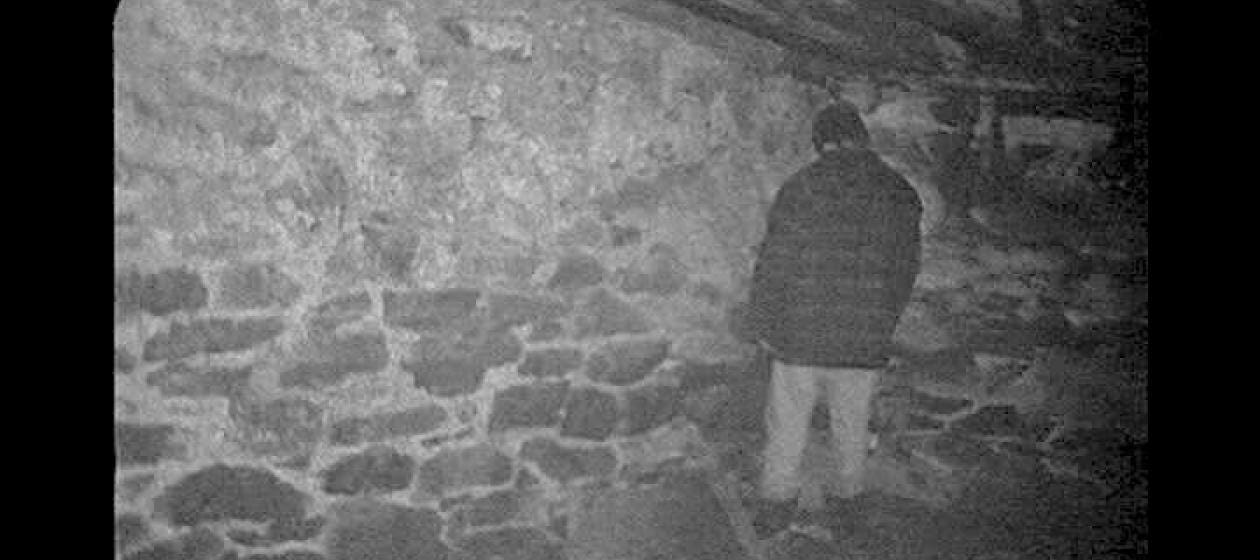
When The Blair Witch Project premiered in the summer of 1999, few people could have predicted the seismic impact it would have on the horror genre—and on independent filmmaking as a whole. Made for a microscopic budget and shot with consumer-grade cameras, the film managed to terrify audiences across the world without relying on elaborate sets, big stars, or visible monsters. Instead, it relied on atmosphere, improvisation, and one of the most convincing illusions of realism ever created in cinema.
What resulted was not just a successful horror film, but a cultural phenomenon that permanently altered how horror could be made, marketed, and experienced.
A Simple Story That Felt Uncomfortably Real
The film was directed by Daniel Myrick and Eduardo Sánchez, two independent filmmakers who conceived the project while studying the idea of legends and how fear grows when stories are passed down through generations.
The plot of The Blair Witch Project is deceptively simple. Three student filmmakers—Heather, Josh, and Mike—travel to the small town of Burkittsville, Maryland to shoot a documentary about a local legend known as the Blair Witch. According to the town’s folklore, a supernatural entity has haunted the nearby woods for centuries, responsible for disappearances and mysterious deaths.
Armed with handheld cameras and a vague plan, the students venture into the forest to investigate the legend.
What begins as a casual student project slowly unravels into terror as the group becomes lost in the woods. Strange sounds echo through the darkness, piles of rocks appear outside their tents, and eerie stick figures hang from the trees. As tension and paranoia rise, the group begins to turn against one another.
Eventually, the footage ends abruptly in a run-down house deep in the woods—leaving audiences with one of the most haunting and ambiguous endings in horror history.
The Power of the Found Footage Illusion
One of the reasons the film was so effective is that it fully committed to the found footage format. The entire movie is presented as raw footage supposedly recovered after the filmmakers vanished.
While earlier films had experimented with similar ideas, The Blair Witch Project made the format feel completely authentic. The actors—Heather Donahue, Joshua Leonard, and Michael C. Williams—were largely unknown at the time, which made their performances feel even more believable.
Much of the dialogue was improvised, and the actors were given only loose outlines for each scene. During filming, the directors intentionally placed the cast under stressful conditions, often providing minimal food and forcing them to navigate through the forest with limited information.
This approach allowed genuine frustration, fear, and exhaustion to seep into their performances.
The result feels less like a traditional film and more like something discovered—something that perhaps wasn’t meant to be seen.
The Revolutionary Marketing Campaign
Another key factor in the film’s success was its groundbreaking marketing strategy.
Before social media existed, the filmmakers and distributors used the early internet to spread the myth of the Blair Witch legend. A website was created detailing fabricated historical accounts, police reports, and interviews about the supposed disappearances of the three filmmakers.
To make the illusion even stronger, the actors were temporarily listed as missing or deceased on online databases, blurring the line between fiction and reality.
Many early viewers genuinely believed the footage might be authentic.
The strategy worked brilliantly. Curiosity spread rapidly online, turning the film into one of the first true examples of viral marketing in cinema.
By the time the movie reached theaters, audiences were already fascinated by the mystery surrounding it.
A Tiny Budget, A Massive Success
From a financial perspective, The Blair Witch Project remains one of the most successful independent films ever made.
Produced for roughly $60,000, the film eventually grossed nearly $250 million worldwide after being acquired and distributed by Artisan Entertainment.
This astonishing return on investment instantly made it a case study in low-budget filmmaking.
For aspiring filmmakers, the movie proved that creativity and atmosphere could outweigh expensive production values. A compelling idea, executed cleverly, could compete with massive Hollywood productions.
The Film That Redefined Found Footage Horror
The influence of The Blair Witch Project can still be seen throughout modern horror.
Its success helped launch an entire wave of found-footage films that attempted to recreate the same raw realism. Some of the most notable examples include Paranormal Activity, REC, Cloverfield, and The Last Exorcism.
While each of these films took the concept in different directions—whether through supernatural hauntings, zombie outbreaks, or giant monsters—they all owe a clear creative debt to the blueprint established by Blair Witch.
The film essentially demonstrated that what the audience doesn’t see can be far more terrifying than what they do.
By refusing to show the witch itself, the movie forced viewers to imagine the horror lurking just beyond the camera’s frame.
Why the Film Still Works Today
More than two decades after its release, The Blair Witch Project remains unsettling.
Part of its lasting power comes from its simplicity. The setting—a dark, endless forest—is primal and universally frightening. Anyone who has ever been lost in the woods can immediately relate to the characters’ escalating panic.
The movie also avoids traditional horror clichés. There are no jump scares driven by loud music cues, no elaborate monster reveals, and no heroic last stand.
Instead, the terror builds slowly through confusion, isolation, and psychological breakdown.
The film’s final moments—showing a character standing silently in the corner of a basement—are still widely considered one of the most disturbing endings in horror history.
A Permanent Mark on Horror Cinema
Whether one finds the film terrifying or frustrating, its impact on horror cannot be denied.
The Blair Witch Project proved that independent horror could compete with Hollywood, that marketing could become part of the storytelling itself, and that audiences were eager for experiences that felt authentic and immersive.
More importantly, it reminded filmmakers that fear often works best when it is unseen.
Sometimes the most terrifying thing in the woods is not the monster itself—but the feeling that something might be there, watching, just beyond the light of your camera.