
The Grotesque Genius of Rob Bottin: Master of Practical Effects
In the golden age of practical effects, a handful of artists transformed horror and science fiction forever. Names like Rick Baker, Tom Savini, and Stan Winston are often celebrated for their contributions to cinema. Yet among these legendary figures stands one artist whose work pushed the limits of what audiences thought was possible.
That artist is Rob Bottin.
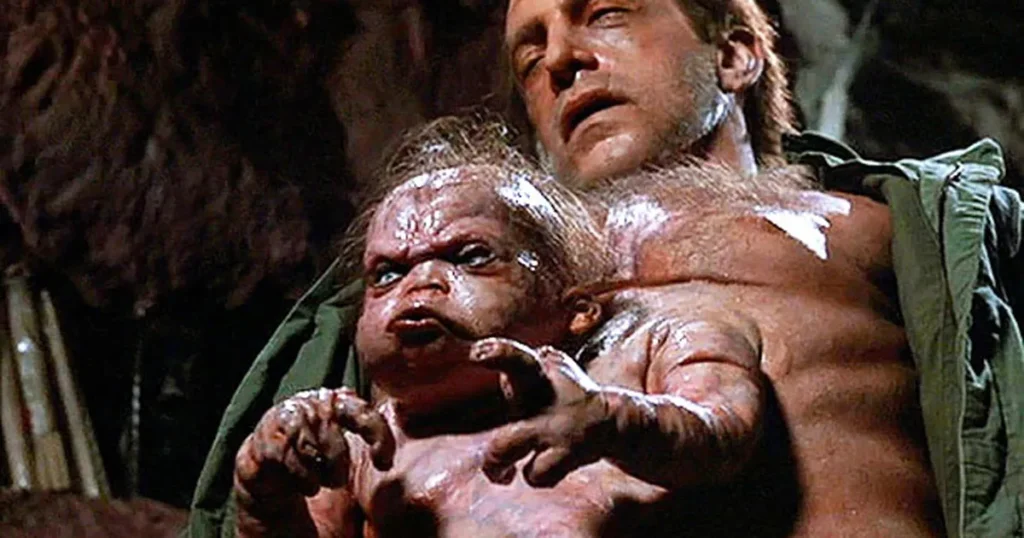
Known for his grotesque imagination and relentless dedication to realism, Bottin helped create some of the most unforgettable creatures and transformations ever seen on screen. His work defined an era when monsters were not created inside computers, but built by hand—layer by layer, piece by piece, dripping with slime, blood, and unsettling realism.
A Prodigy of the Practical Effects World
Rob Bottin entered the special effects industry at a remarkably young age. As a teenager fascinated by monsters, creature design, and makeup artistry, he began learning the technical side of practical effects through experimentation and dedication.
His talent quickly caught the attention of legendary makeup artist Rick Baker, who brought Bottin into professional productions. Working under Baker exposed him to the intense craftsmanship and creativity required in practical effects work.
Before long, Bottin was carving out his own reputation as one of the most inventive creature designers in Hollywood.
Transforming Horror in the 1980s
One of Bottin’s earliest major showcases came with The Howling, directed by Joe Dante. The film featured one of the most groundbreaking werewolf transformations ever put on screen.
Instead of relying on editing tricks or quick cuts, Bottin created a slow, agonizing metamorphosis using prosthetics, animatronics, and mechanical effects. Bones stretched, jaws extended, and fur erupted from skin in a transformation that felt disturbingly physical.
The scene changed the expectations for creature effects in horror films.
But Bottin’s most famous work was still ahead of him.
The Nightmare of The Thing
In 1982, Bottin was given the enormous task of designing the creature effects for The Thing, directed by John Carpenter.
Rather than creating a single monster, Bottin had to design an organism capable of mutating endlessly—absorbing and replicating other life forms in grotesque ways. The result was a series of disturbing creature effects that remain legendary today.
Among the film’s most famous moments:
- A man’s chest splitting open into a monstrous mouth
- A severed head sprouting spider legs and crawling away
- Human bodies transforming into horrific hybrids of flesh and teeth
The work was so demanding that Bottin reportedly worked himself to exhaustion during production and had to be hospitalized near the end of filming.
Despite its troubled production, the creature effects in The Thing are now widely considered one of the greatest achievements in practical effects history.
Science Fiction and Cybernetic Horror
Bottin’s talents were not limited to horror creatures. In RoboCop, directed by Paul Verhoeven, Bottin helped create the film’s iconic cyborg hero as well as some of its most shocking makeup effects.
One of the film’s most memorable scenes involves a criminal who mutates grotesquely after exposure to toxic waste, his body melting and collapsing in a horrifying display of practical effects.
The film demonstrated Bottin’s ability to move seamlessly between creature design, makeup effects, and mechanical suit construction.
A Legacy Built in Flesh and Latex
As computer-generated imagery began to dominate filmmaking in the 1990s, Bottin gradually stepped away from the industry. Unlike many artists who embraced the spotlight, he remained a quiet and private figure.
Yet his influence remains enormous.
Modern filmmakers and effects artists continue to study his work, especially the grotesque biological realism of the creatures in The Thing. Even in the digital era, practical effects inspired by Bottin’s methods continue to appear in horror cinema.
His creations remind audiences of something that digital monsters sometimes lack: physical presence.
These creatures were real objects on set, interacting with actors and cameras in ways that made them feel disturbingly alive.
Films Featuring the Work of Rob Bottin
Below is a selection of notable films where Rob Bottin contributed makeup effects, creature design, animatronics, or visual effects work:
- King Kong – Early makeup effects work
- The Fog – Special makeup effects
- The Howling – Groundbreaking werewolf transformation
- The Thing – Creature effects masterpiece
- Twilight Zone: The Movie – Special makeup effects
- Legend – Makeup effects (including the iconic devil design)
- Innerspace – Special effects work
- RoboCop – RoboCop suit and creature effects
- Total Recall – Creature and prosthetic effects
- Basic Instinct – Makeup effects
- Seven – Makeup effects for the disturbing crime scenes
- Fight Club – Special makeup effects
The Enduring Power of Practical Monsters
The career of Rob Bottin represents one of the most creative periods in horror and science fiction filmmaking. His creatures were not simply visual effects—they were mechanical sculptures brought to life through engineering, artistry, and imagination.
Decades later, the monsters he helped create still crawl through the nightmares of movie fans around the world.
And in an age dominated by digital effects, Bottin’s work remains a reminder that sometimes the most terrifying monsters are the ones that were built by hand.