
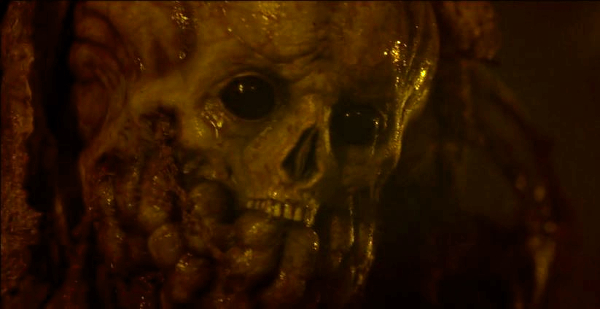
The Nightmarish Practical Effects of The Void
In an era where horror films increasingly rely on computer-generated imagery, The Void stands as a love letter to the grotesque, tactile magic of practical effects. Released in 2016 and directed by Jeremy Gillespie and Steven Kostanski, the film deliberately channels the spirit of 1980s horror while blending cosmic dread with surreal body horror.
For fans of classic monster movies, The Void feels almost like a lost relic from the VHS era—complete with rubber creatures, gallons of blood, and an atmosphere of creeping existential terror.
A Simple Setup That Spirals into Cosmic Horror
The story begins with police officer Daniel Carter discovering a severely injured man crawling along a deserted road in the middle of the night. Carter rushes him to the nearest hospital, a nearly abandoned medical facility that is quietly preparing to close its doors.
What seems like a routine emergency quickly turns into something far more disturbing.
Soon after arriving, the small group trapped inside the hospital—including nurses, patients, and police officers—realizes they are surrounded by strange hooded figures standing silently outside. These mysterious cultists refuse to enter, but they also refuse to let anyone leave.
As the tension builds inside the building, something even worse begins to emerge within the hospital itself.
Patients begin transforming into grotesque monstrosities, reality starts to fracture, and a gateway to something ancient and incomprehensible slowly reveals itself beneath the building.
A Clear Tribute to Lovecraftian Horror
One of the strongest influences on The Void is the cosmic horror tradition of H. P. Lovecraft. Rather than focusing purely on physical threats, the film explores the terror of encountering something far beyond human understanding.
Lovecraft’s stories often revolved around the idea that the universe contains forces so vast and alien that merely glimpsing them can shatter the human mind. The Void embraces this philosophy by gradually revealing that the hospital sits on the edge of an unfathomable dimension.
The cultists outside the building appear to worship—or perhaps fear—what lies beyond that doorway.
Rather than providing clear answers, the film allows the mystery to deepen as the story unfolds, reinforcing the idea that the characters are dealing with something ancient and unknowable.
The Return of Old-School Practical Effects
What truly sets The Void apart from many modern horror films is its commitment to practical creature effects.
The directors were heavily inspired by the work of legendary horror filmmaker John Carpenter, particularly films like The Thing and Prince of Darkness, which relied on elaborate physical effects to bring their nightmares to life.
Instead of relying heavily on digital animation, the creatures in The Void are created using prosthetics, animatronics, and traditional makeup techniques.
This gives the monsters a disturbing physical presence that CGI often struggles to replicate. The slime, the twitching limbs, and the grotesque transformations feel real because they are actually happening on screen.
The film’s most memorable creatures resemble something halfway between medical experiments gone wrong and cosmic abominations. Limbs stretch in unnatural directions, bodies fuse together, and faces distort into horrifying shapes.
The result is a series of visuals that feel both nostalgic and deeply unsettling.
A Film Born From Passion and Crowdfunding
Another interesting aspect of The Void is how it was produced. Much like many cult horror classics of the past, the film was created with a modest budget and a great deal of passion.
Part of the production was funded through a crowdfunding campaign, allowing horror fans themselves to help bring the project to life. This grassroots support reflects how strongly audiences still crave practical effects and old-school monster filmmaking.
The directors, both members of the Canadian filmmaking collective Astron-6, were already known for their affection toward retro genre filmmaking. With The Void, they managed to combine that nostalgic sensibility with a much darker and more atmospheric tone.
The Claustrophobic Horror of Isolation
Much of the film’s effectiveness comes from its setting.
By trapping the characters inside a nearly empty hospital, the story creates a powerful sense of claustrophobia. The building becomes a maze of dark corridors, flickering lights, and locked doors.
Outside, the silent cultists remain motionless under the glow of streetlights, their triangular symbols glowing faintly in the darkness.
Inside, the characters are forced to confront monsters that feel like something ripped directly from a nightmare.
This combination of external siege and internal horror echoes classic siege films while also reinforcing the Lovecraftian theme that the real danger is not outside—but somewhere deeper within the building.
A Cult Classic in the Making
While The Void did not become a massive mainstream hit upon its release, it quickly developed a strong following among horror fans.
Many viewers praised the film for embracing the practical effects tradition at a time when digital monsters dominate the genre. Others appreciated its commitment to cosmic horror, a style of storytelling that remains relatively rare in cinema.
Over time, the movie has steadily earned its place as a modern cult classic, especially among fans who grew up watching the monster-heavy horror films of the 1980s.
Why Practical Effects Still Matter
Ultimately, The Void reminds audiences why practical effects continue to hold such power in horror.
Physical creatures occupy the same space as the actors, which creates a level of realism and discomfort that is difficult to replicate digitally. The imperfections—sticky textures, unnatural movements, and visible weight—make the monsters feel disturbingly alive.
By embracing these techniques, The Void proves that the spirit of classic horror filmmaking is far from dead.
Sometimes the most terrifying monsters aren’t the ones created inside a computer. Sometimes they are built by hand, covered in latex and slime, waiting in the darkness of a hospital hallway.
And when those creatures finally step into the light, they feel terrifyingly real.